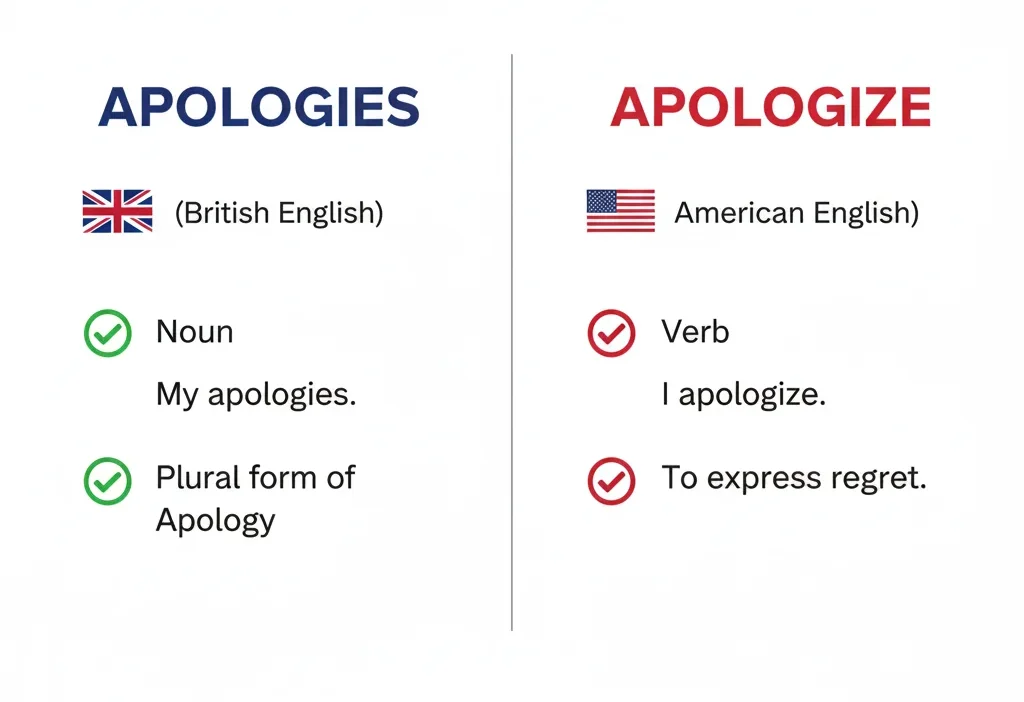
Apologies is a noun meaning an expression of regret.
Apologize is a verb meaning the act of saying sorry.
Examples:
- My apologies for the delay. ✅
- I apologize for the mistake. ✅
- ❌ I apologies for the delay.
Use apologies when naming the regret.
Use apologize when performing the action.
Many English learners and native speakers search for apologies vs apologize because the words look similar but behave very differently in sentences. One small mistake can change the tone of an email, letter, or public message. Should you say “my apologies” or “I apologize”? Is apologies correct in formal writing, or does it sound too casual? These questions cause confusion because one word is a noun and the other is a verb, yet both relate to saying sorry. Add British vs American spelling differences, and the confusion grows.
This guide solves that problem clearly and quickly. You will learn the exact meaning, correct grammar, real-life examples, and professional advice for choosing the right word every time. By the end, you will confidently use apologies vs apologize in emails, conversations, and formal writing without hesitation.
The Origin of Apologies vs Apologize
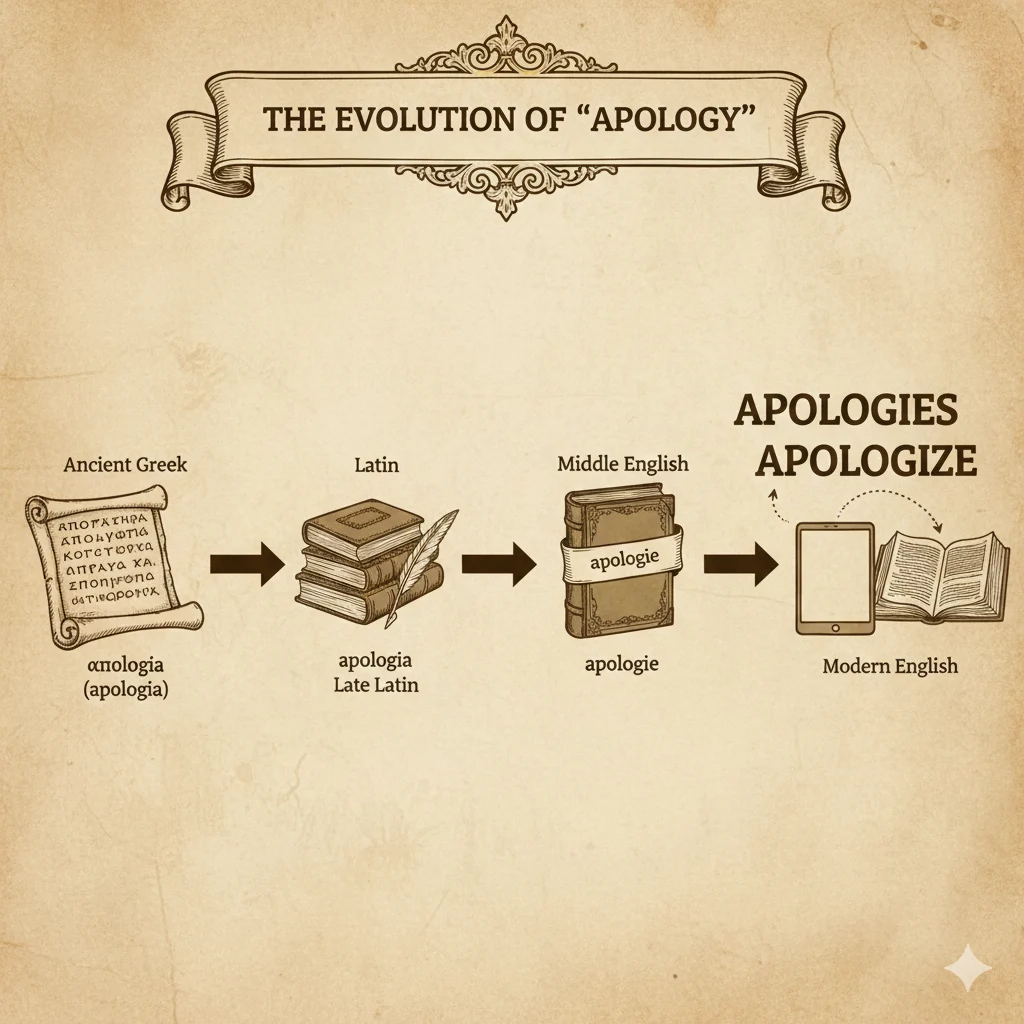
Both words come from the Greek word apologia, meaning “a speech in defense.” Over time, Latin and Old French shaped the term into Middle English. Originally, an apology was not about saying sorry but about explaining oneself.
As English evolved, meanings softened. Apology became an admission of regret. Apologize developed as the verb form meaning to express sorrow. The spelling difference comes from English grammar rules, not meaning.
British English kept -ise endings, while American English preferred -ize endings. This is why you see apologise UK and apologize US, while apologies stays the same in both.
British English vs American English Spelling
The main difference appears in the verb form.
| Form | British English | American English |
|---|---|---|
| Verb | apologise | apologize |
| Noun | apologies | apologies |
| Formal use | Common | Common |
| Informal use | Common | Common |
Key point:
- Apologies is the same everywhere.
- Apologize vs apologise UK depends on region.
Preferred vs Prefered 📌 The Secret English Rule
Which Spelling Should You Use?
Choose based on your audience.
- US audience: Use apologize
- UK/Commonwealth: Use apologise
- Global or mixed audience: Apologize is safest
- Formal writing: Either is correct if consistent
For professional emails, clarity matters more than style. Consistency builds trust and avoids distraction.
Common Mistakes with Apologies vs Apologize
Many errors come from mixing grammar roles.
Wrong → Correct
- ❌ I apologies for being late.
✅ I apologize for being late. - ❌ Please apologize accepted.
✅ Please accept my apologies. - ❌ He gave an apologize.
✅ He gave an apology.
Remember: noun vs verb decides correctness.
Apologies vs Apologize in Everyday Examples
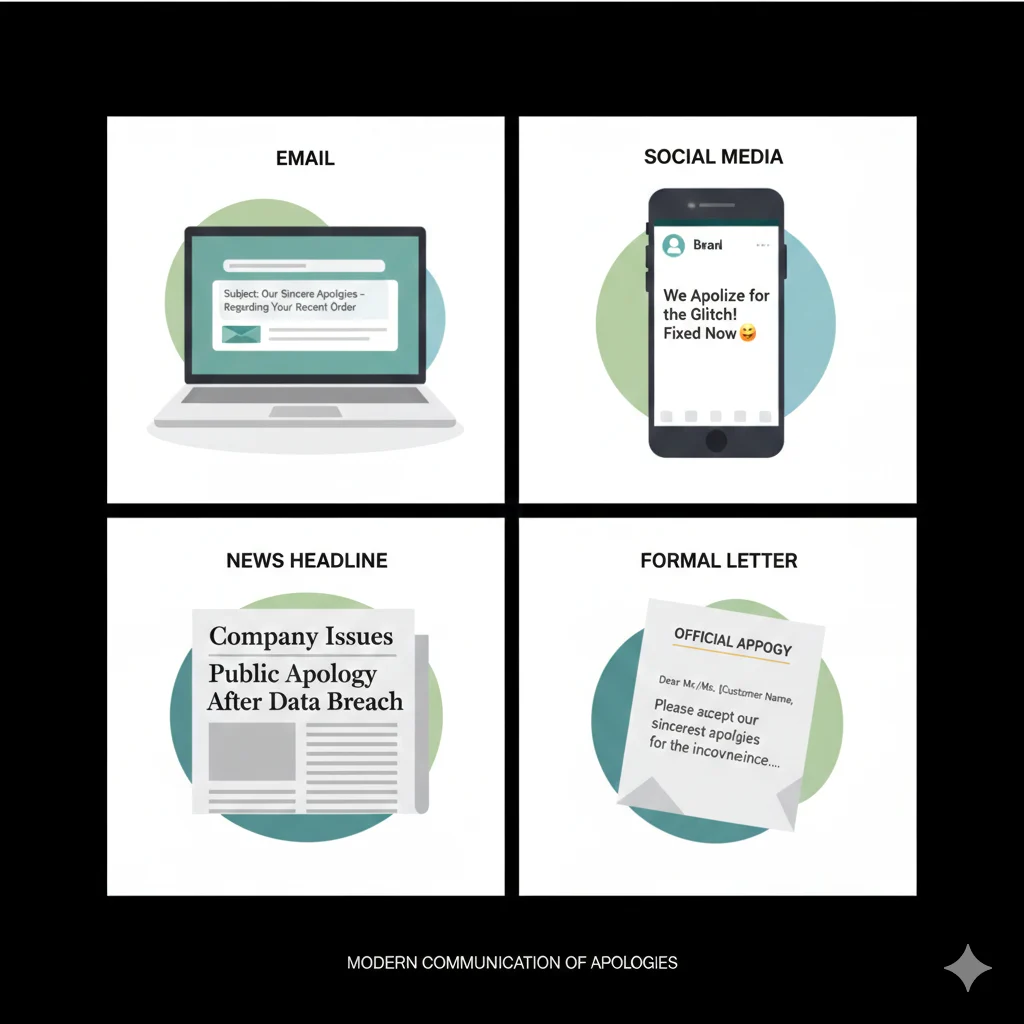
Emails
- My apologies for the delayed response.
- I apologize for missing your call.
News
- The company issued public apologies.
- The CEO apologized on live television.
Social Media
- Apologies if this post offended anyone.
- I apologize for the confusion earlier.
Formal Writing
- Please accept our sincere apologies.
- We apologize for any inconvenience caused.
Apologies vs Apologize – Google Trends & Usage Data
Search data shows apologize is more popular in the United States, especially in emails and customer support content. Apologies appears often in professional and diplomatic language worldwide.
In the UK, apologise is widely searched, especially by learners comparing spelling rules. Globally, people search my apologies vs apologize when unsure about tone. Business communication favors apologies, while personal speech favors apologize.
Has vs Had 😬 Are You Using This Tense Incorrectly?
Apologies vs Apologize Comparison Table
| Feature | Apologies | Apologize |
|---|---|---|
| Part of speech | Noun | Verb |
| Meaning | Expression of regret | Act of saying sorry |
| Example | My apologies | I apologize |
| UK spelling | Same | Apologise |
| US spelling | Same | Apologize |
| Tone | Polite, formal | Direct, personal |
FAQs
Is it correct to say apologies?
Yes. Apologies is correct and polite, especially in formal speech and writing.
What is the difference between apologize and apologies?
Apologize is an action. Apologies is the thing you offer.
Is it apologies or apologize UK?
UK English uses apologies and apologise.
How do you use apologize?
Use it with a subject: I apologize for the error.
My apologies vs apologize – which is better?
My apologies sounds more formal. I apologize sounds personal.
What does apologise mean?
Apologise meaning: to express regret or say sorry (UK spelling).
Are apologies vs apologize pronunciation different?
Yes. Apologies has four syllables. Apologize has four but ends with a “z” sound.
Conclusion
Understanding apologies vs apologize helps you communicate clearly, politely, and professionally. The key difference is simple: apologies is a noun, while apologize is a verb. Once you know this, most errors disappear. Regional spelling matters only for the verb form, with apologise UK and apologize US following local rules. In emails and formal writing, my apologies sounds respectful and calm. In conversations, I apologize feels direct and sincere. Avoid mixing grammar roles, and always match your spelling to your audience. Whether you are writing a letter, posting online, or speaking publicly, choosing the correct word improves clarity and tone. Mastering this small detail makes your English sound confident, natural, and professional across all contexts.

Emily Dawes is a passionate numerology writer who helps readers understand the spiritual meaning behind numbers. She blends intuition and research to create uplifting, insightful guidance.