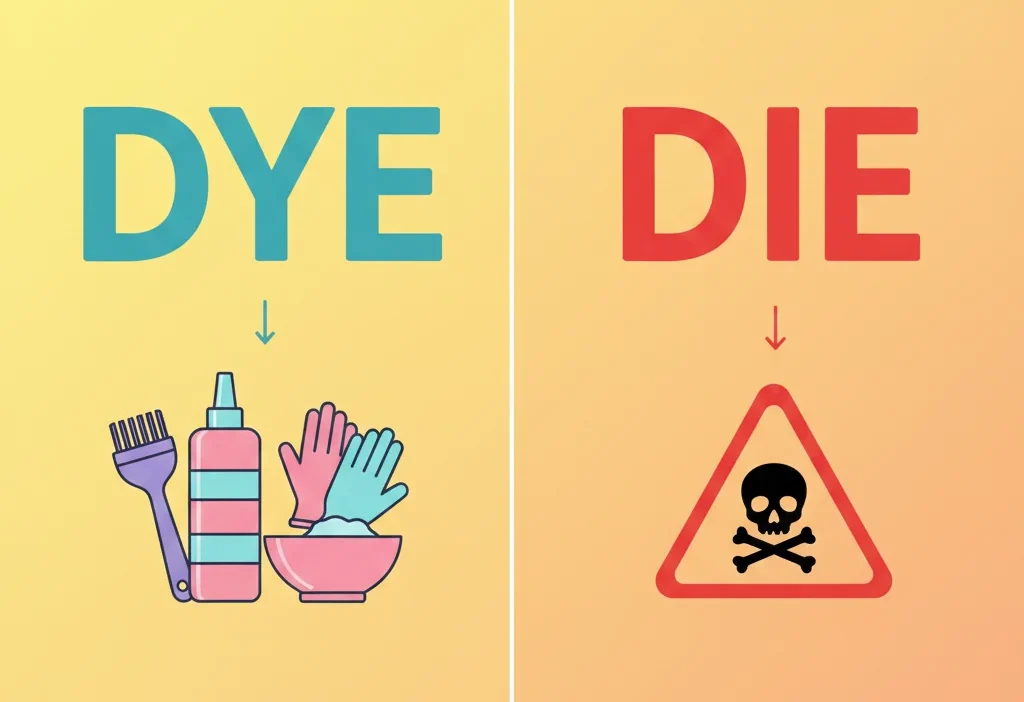
Dye means to add color to something, like fabric or hair.
Die means to stop living or refers to a cutting tool in industry.
Examples:
- I will dye my hair blue.
- Flowers die without water.
- He works in a tool and die shop.
Dye vs die pronunciation: Both sound the same, making them homophones.
Have you ever paused while writing and wondered, is it dye or die? You’re not alone. The confusion between dye vs die is one of the most searched English spelling problems worldwide.
These two words look similar, sound the same, and are classic homophones, yet their meanings are completely different. One relates to color and change, while the other refers to life ending or a tool used in manufacturing.
A single wrong letter can turn “I dyed my hair” into something shocking. That’s why people constantly search for what is the difference between dye and die, is it die or dye your hair, and is it tool and die or dye.
This guide clears all confusion with a quick answer, simple rules, real examples, and professional usage advice. By the end, you’ll never mix up die or dye again—whether writing emails, social posts, or formal documents.
The Origin of Dye vs Die
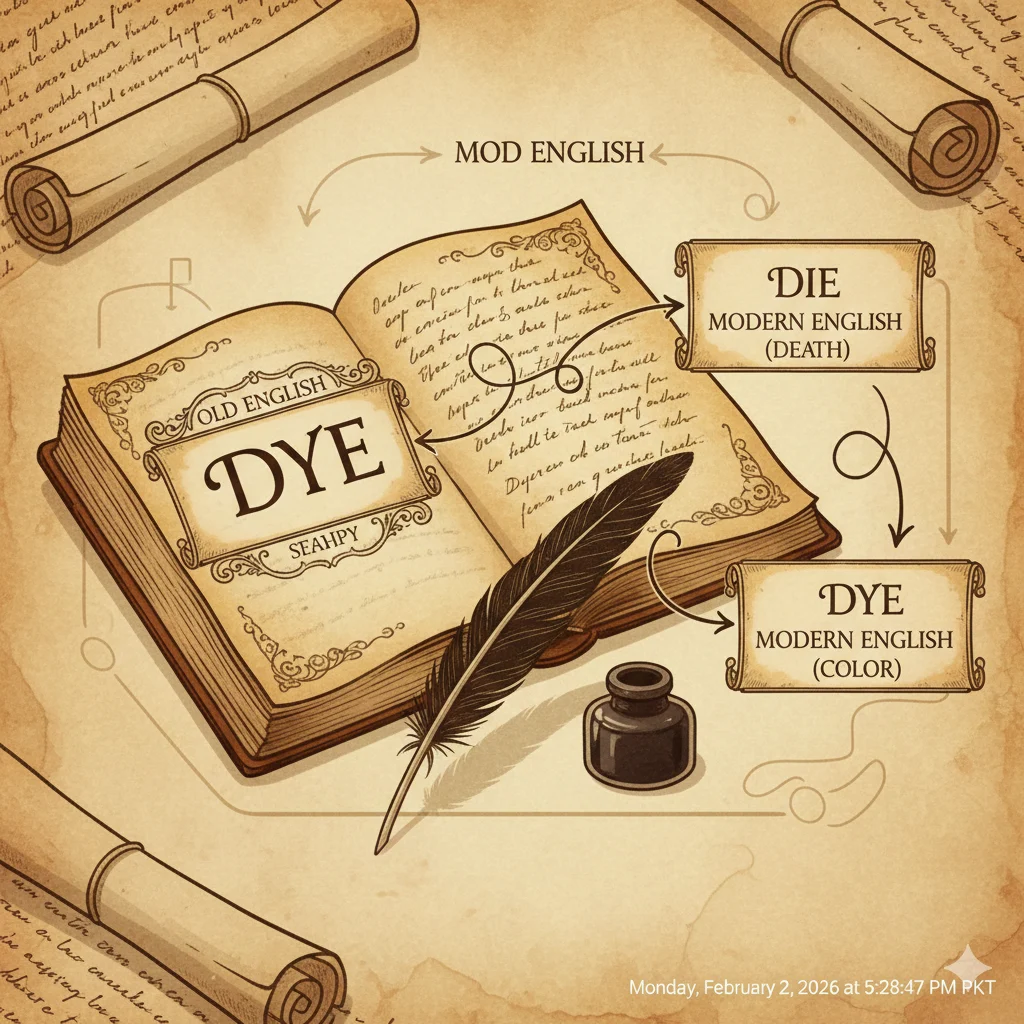
The confusion between dye and die comes from their shared pronunciation but different histories.
Die comes from Old Norse deyja, meaning “to perish.” It has been used for centuries to describe death or the end of life. Over time, it also gained a technical meaning, referring to a metal die used for shaping or cutting materials.
Dye comes from Old English deag and deah, meaning “color” or “tinge.” It has always been linked to coloring cloth, hair, or objects.
The spelling differences exist because the words evolved from different languages but later merged in sound. This is why die and dye homophones remain confusing today.
British English vs American English Spelling
There is no spelling difference between British and American English for dye vs die. Both varieties use the same spellings and meanings.
| Usage Context | American English | British English |
|---|---|---|
| Hair coloring | dye | dye |
| Death | die | die |
| Manufacturing | tool and die | tool and die |
| Past tense hair | dyed my hair | dyed my hair |
Unlike colour vs color, this pair stays the same worldwide.
Flak vs Flack ⚠️ This Small Error Can Ruin Your Writing
Which Spelling Should You Use?
Use dye when talking about coloring anything: hair, fabric, eggs, or paper.
Use die when talking about death, dice, or industrial tools.
Audience advice:
- US audience: Follow standard meaning rules.
- UK/Commonwealth: Same rules apply.
- Global writing: Context matters more than location.
If you’re unsure, ask: Is color involved? If yes, choose dye.
Common Mistakes with Dye vs Die
Here are frequent errors people make:
❌ I want to die my hair.
✅ I want to dye my hair.
❌ The flowers dyed in the heat.
✅ The flowers died in the heat.
❌ He works in tool and dye.
✅ He works in tool and die.
Died or dyed my hair is one of the most common spelling mistakes online.
Dye vs Die in Everyday Examples
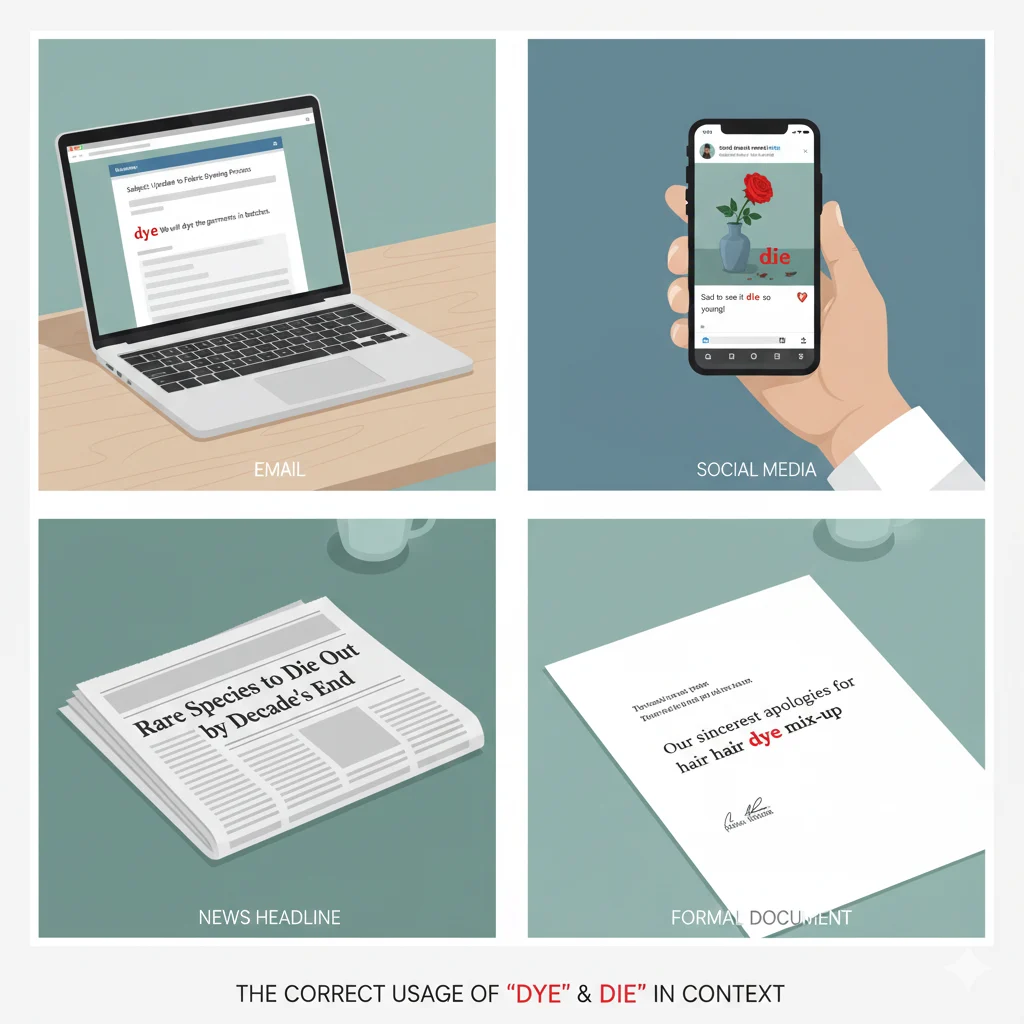
Emails:
- “I plan to dye my hair before the event.”
News:
- “Three plants died due to extreme heat.”
Social Media:
- “Just dyed my hair pink 💖”
Formal Writing:
- “The technician specializes in tool and die manufacturing.”
Dice:
- Singular: die
- Plural of die: dice
Dye vs Die – Google Trends & Usage Data
Search data shows dye vs die spikes during:
- Fashion seasons (hair dye trends)
- Grammar exam periods
- Manufacturing job searches (tool and die)
Country trends:
- USA & UK: Hair-related searches dominate.
- India & Pakistan: Grammar and exam-related queries are common.
- Global: “Is dyeing a word” and “die dye meaning” trend steadily.
The confusion is driven by pronunciation and autocorrect errors.
Caring vs Careing 😬 Why One Version Is Always Wrong
Comparison Table: Dye vs Die
| Word | Meaning | Example | Past Tense | Related Terms |
|---|---|---|---|---|
| Dye | Add color | Dye your hair | Dyed | Dyeing, dyes |
| Die | Stop living | Plants die | Died | Dice, dying |
FAQs
What is the difference between dye and die?
Dye is for coloring. Die means death or a cutting tool.
Is it die or dye your hair?
It is dye your hair.
Is it tool and die or dye?
Correct term is tool and die.
Is it spelled dye or die?
Both are correct, depending on meaning.
Die or dye meaning?
Dye = color. Die = death or tool.
Is dyeing a word?
Yes, dyeing is the correct spelling.
What is the plural of dye?
The plural is dyes.
Conclusion
The difference between dye vs die is simple but powerful. Dye always relates to color, while die refers to death, dice, or industrial tools. Because they sound the same, these homophones confuse writers, students, and professionals every day. Remember the color rule: if color is involved, choose dye. There is no British or American spelling difference, so context is your guide. Avoid common mistakes like “die my hair” and “tool and dye.” Whether you’re writing casually or professionally, correct usage builds clarity and trust. Mastering die or dye not only improves grammar but also prevents awkward misunderstandings. Keep this guide handy, and you’ll always choose the right word with confidence.