
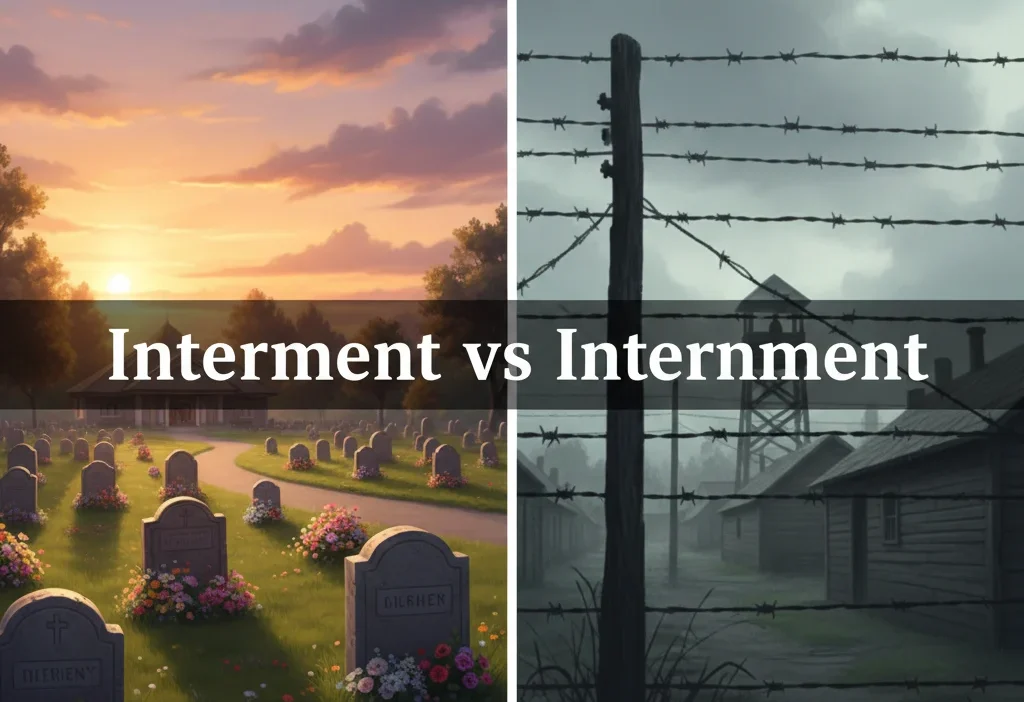
Interment means burial or placing a body or ashes in their final resting place.
Internment means detaining or imprisoning people, often during war or emergencies.
Simple examples:
- ✅ The interment service will be held on Friday.
- ❌ The internment service will be held on Friday. (Wrong)
- ✅ During the war, many civilians faced internment.
- ❌ During the war, many civilians faced interment. (Wrong)
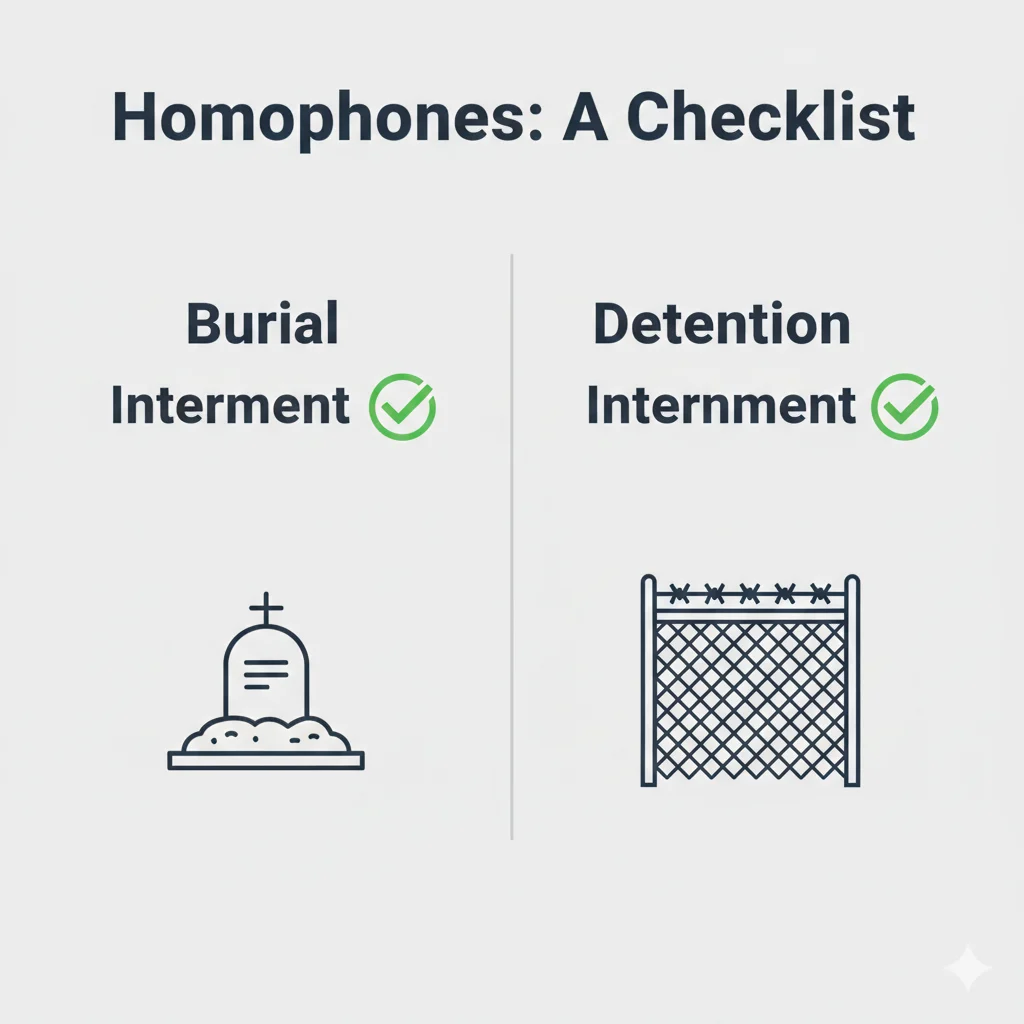
👉 Burial = Interment
👉 Detention = Internment
Have you ever paused while writing a condolence message, news article, or legal document and wondered: Is it interment or internment? You are not alone. Thousands of people search for “interment vs internment” every month because these two words look almost identical but mean very different things.
The confusion usually happens around death, burial, and historical events. One word relates to laying someone to rest, while the other refers to detaining people—often during war or political conflict. Using the wrong one can completely change the meaning of a sentence and, in sensitive contexts like funerals or history, cause embarrassment or offense.
This article solves that confusion once and for all. You will get a quick answer, clear definitions, real-life examples, spelling guidance for British and American English, and professional usage advice. We will also cover related terms like inurnment, interment of ashes, and internment death, so you never second-guess yourself again.
By the end, you’ll know exactly which word to use—and why.
The Origin of Interment vs Internment

Understanding word origins makes the difference crystal clear.
Interment
- Comes from Latin “in terra”, meaning “into the earth.”
- First used in the 14th century.
- Always linked to burial, funerals, ashes, and graves.
Internment
- Comes from Latin “internus”, meaning “inside.”
- Became common in the 19th–20th century.
- Associated with war camps, imprisonment, and confinement.
The spelling difference exists because the meanings evolved separately, even though the words look similar.
British English vs American English Spelling
Unlike words such as colour/color, interment and internment are spelled the same in British and American English. The confusion is not regional—it is semantic.
Comparison Table
| Word | British English | American English | Meaning |
|---|---|---|---|
| Interment | Interment | Interment | Burial or placing remains |
| Internment | Internment | Internment | Detention or confinement |
✔ Same spelling
✔ Same meaning
❌ Very different usage
Eather vs Either 👀 Why Google Users Keep Searching This
Which Spelling Should You Use?
Your choice depends on context, not audience location.
Use Interment if:
- You are writing about death or burial
- You mention ashes, graves, funerals
- You refer to an interment service
Examples:
- Interment of ashes will follow the ceremony.
- The family chose private interment.
Use Internment if:
- You discuss war, history, or imprisonment
- You refer to internment camps
- You mention internment death in historical contexts
Examples:
- The internment of civilians lasted years.
- Many suffered during internment.
Common Mistakes with Interment vs Internment
Here are the most frequent errors people make:
❌ Mistake 1: Using internment for burial
- Incorrect: The internment will take place today.
- Correct: The interment will take place today.
❌ Mistake 2: Using interment for camps
- Incorrect: Civilians faced interment during the war.
- Correct: Civilians faced internment during the war.
❌ Mistake 3: Confusing interment with inurnment
- Interment = placing remains in final resting place
- Inurnment = placing ashes into an urn
Interment vs Internment in Everyday Examples
📧 Emails
- The interment service will be private.
- Historical records describe mass internment.
📰 News
- A memorial was built near the interment site.
- The report details internment deaths during WWII.
📱 Social Media
- Attending my grandfather’s interment today.
- Learning about Japanese American internment.
📜 Formal Writing
- The interment of ashes followed religious rites.
- Internment policies violated human rights.
Here vs Hear 🔊 The Tiny Difference Everyone Gets Wrong
Interment vs Internment – Google Trends & Usage Data
Search data shows:
- Interment is mostly searched with:
- interment of ashes
- interment service
- interment vs burial
- Internment is searched with:
- internment camps
- internment death
- wartime internment
Popularity by region:
- US & UK: Internment spikes during historical discussions
- Global: Interment appears more in funeral-related searches
This proves users often confuse the terms when researching death-related topics.
Interment vs Internment vs Inurnment
| Term | Meaning | Usage |
|---|---|---|
| Interment | Burial or final placement | Graves, mausoleums |
| Internment | Detention or imprisonment | Camps, war |
| Inurnment | Placing ashes in an urn | Cremation rituals |
Example:
- The ashes were inurned, then interment followed.
FAQs: Interment vs Internment
1. Is burial interment or internment?
Burial is interment, never internment.
2. Is there a difference between interment and internment?
Yes. Interment means burial. Internment means detention.
3. What do you mean by internment?
Internment means forcibly holding people, often during war.
4. What is the difference between interred and inurned?
Interred means buried. Inurned means ashes placed in an urn.
5. Interment or internment of ashes?
Correct term: Interment of ashes.
6. What is an interment service?
A ceremony marking burial or placement of remains.
7. Can internment refer to death?
Only indirectly, such as deaths occurring during internment camps.
Conclusion
The difference between interment vs internment is small in spelling but huge in meaning. Interment is always connected to burial, ashes, and final rest. Internment is about detention, confinement, and history, often involving war or political actions.
If you remember one rule, remember this:
👉 If it involves death or burial, choose interment.
👉 If it involves imprisonment or camps, choose internment.
Understanding this distinction helps you write clearly, respectfully, and professionally—especially in sensitive contexts like funerals or historical discussions. It also improves SEO accuracy, reader trust, and credibility.
Now, whether you are writing an email, article, or legal document, you can use these words with full confidence.