English learners and even fluent writers often pause when choosing between somebody and someone. The confusion feels small, but it matters. A single word choice can affect tone, clarity, and professionalism.
This is why people frequently search for somebody vs someone online. They want a quick answer, but they also want certainty. Is one more correct? Is one more formal? Does American English prefer one while British English prefers the other?
The confusion exists because both words mean almost the same thing. Like anyone/anybody, English gives two options for the same idea. Without clear rules, writers worry about sounding informal, incorrect, or unnatural.
This is especially true in exams, emails, articles, and business writing. Learners also ask about real-life usage, quizzes, examples, and even meaning differences in Hindi.
This article solves that problem fully. You will get a simple explanation, clear examples, expert-style guidance, and practical advice. By the end, you will know exactly when to use somebody or someone—without guessing, overthinking, or making mistakes.
Somebody vs Someone Means
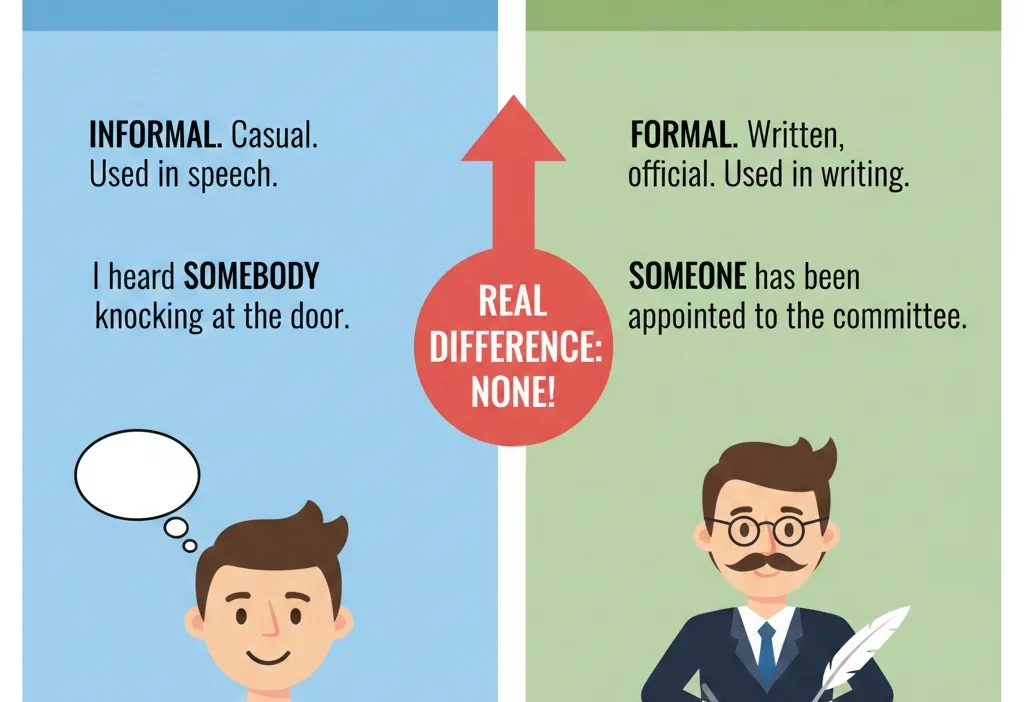
There is no meaning difference between somebody and someone. Both refer to an unknown or unspecified person.
Example:
Someone is calling you.
Somebody left their bag here.
Both sentences are correct. The difference is mainly about tone, not grammar. Someone sounds slightly more neutral and formal. Somebody sounds more conversational and emotional. In most situations, you can use either word without changing the meaning.

The Origin of Somebody vs Someone
The words somebody and someone come from Old English roots. Some means an unspecified amount. Body once meant a physical person. One referred to an individual. Over time, English combined these words to describe an unknown person.
English evolved through many influences, including Germanic and Latin languages. Instead of removing duplicate forms, English kept them. This is why we also have anyone/anybody and everyone/everybody. These pairs exist because English values flexibility and natural speech patterns rather than strict simplicity.
British English vs American English Spelling
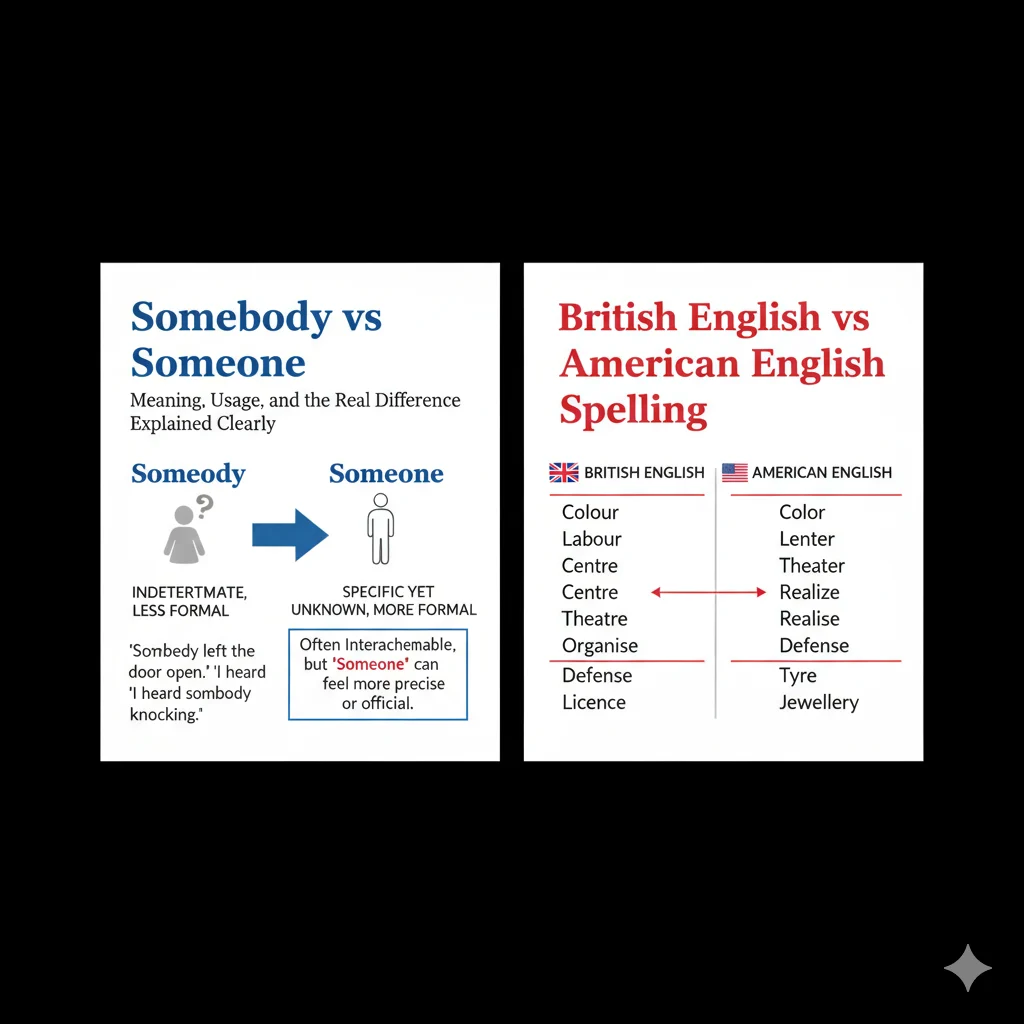
There is no spelling difference between British and American English for somebody and someone. Both spellings are identical. However, usage preference can differ slightly.
American English often prefers someone in formal writing. British English freely uses both forms in writing and speech.
| Context | American English | British English |
|---|---|---|
| Formal writing | Someone | Someone |
| Casual speech | Somebody | Somebody |
| Exams | Someone | Someone |
| Media | Someone | Someone or Somebody |
Which Spelling Should You Use?
The best choice depends on your audience and purpose.
If you are writing for a US audience or professional setting, someone is the safer option. It sounds neutral and polished.
If you are writing for a UK or Commonwealth audience, both words are equally acceptable.
For global audiences, someone works best because it appears more often in international English.
If you want a friendly, emotional, or conversational tone, somebody feels more natural.
Common Mistakes with Somebody vs Someone
A common mistake is believing one word is wrong. Both are correct.
Another mistake is using somebody in very formal documents, such as legal or academic writing.
Incorrect: Somebody must complete the legal form.
Correct: Someone must complete the legal form.
Do not confuse someone with someone else. Someone else means a different person, not an unknown one.
Somebody vs Someone in Everyday Examples
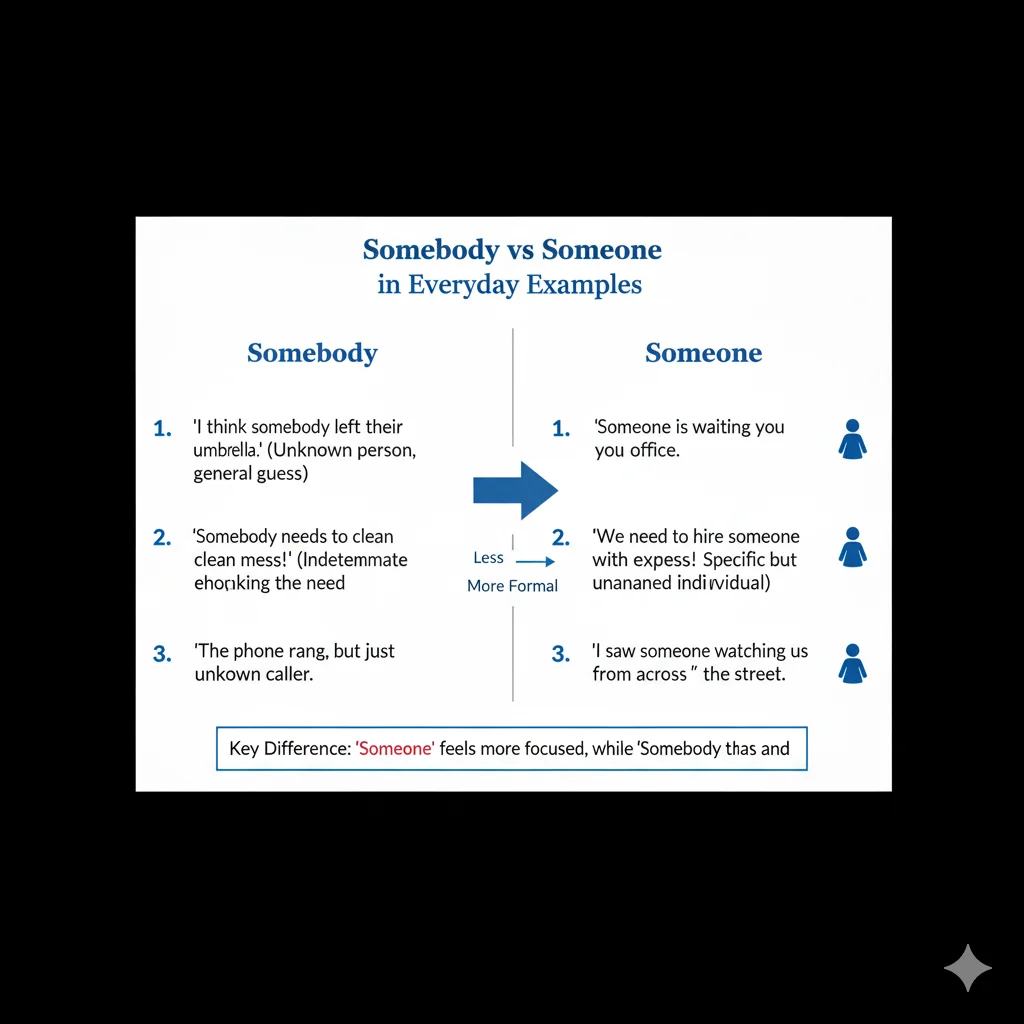
Emails:
Someone will contact you shortly.
News reports:
Somebody reported suspicious activity.
Social media:
Is somebody still awake?
Formal writing:
Someone should review the final report.
Searches like someone somebody song show that both words are commonly used in lyrics, movies, and pop culture, proving their natural everyday usage.
Somebody vs Someone – Google Trends & Usage Data
Search behavior shows that someone is more commonly used in educational, business, and professional content. Somebody appears more often in casual speech, social media, and entertainment.
Global usage data indicates that learners frequently search somebody vs someone meaning, somebody vs someone quiz, and should I use someone or somebody. This shows strong learning intent and confirms the need for clear guidance.
Comparison Table: Somebody vs Someone
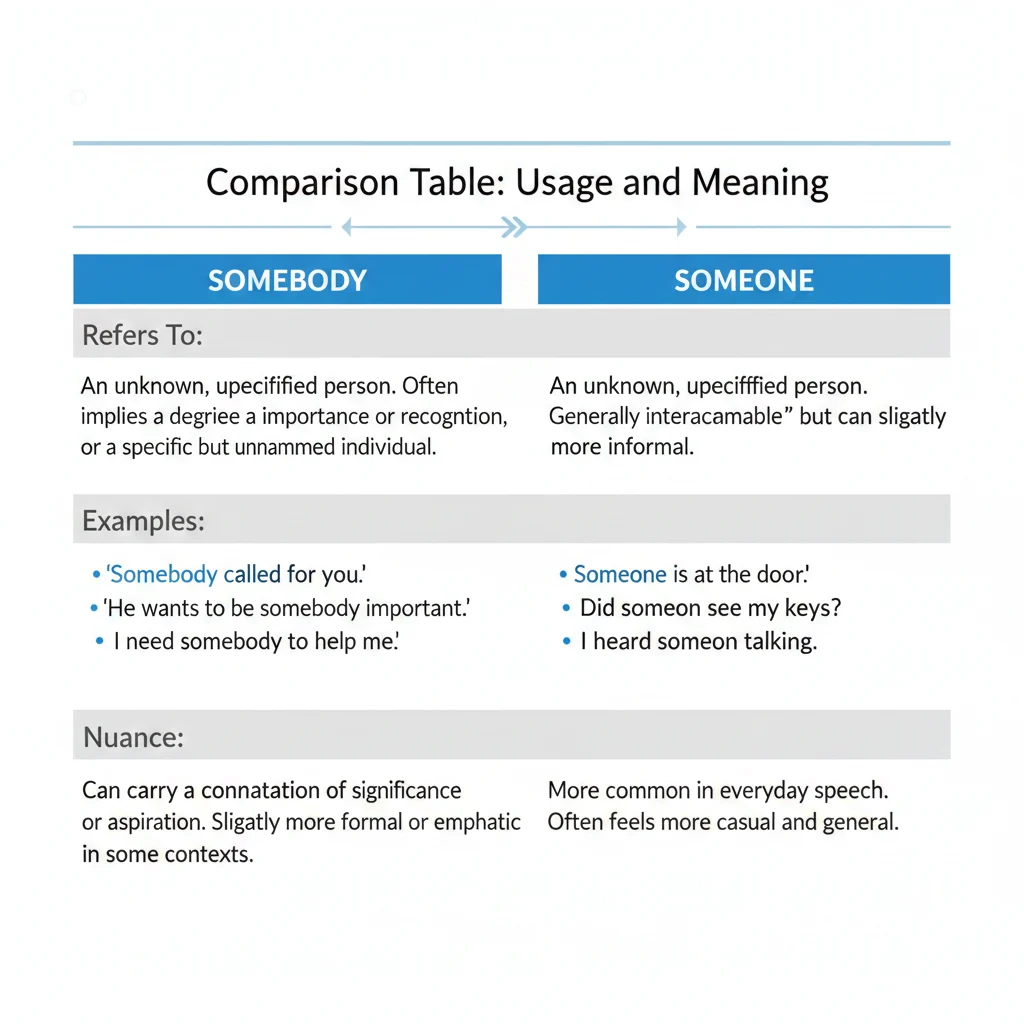
| Feature | Somebody | Someone |
|---|---|---|
| Meaning | Unknown person | Unknown person |
| Tone | Casual | Neutral |
| Formal use | Less common | More common |
| Spoken English | Very common | Common |
| Written English | Informal | Preferred |
FAQs
Should I use someone or somebody?
Use someone in formal writing. Use somebody in casual conversation.
Which is more common: someone or somebody?
Someone is more common in writing. Somebody is more common in speech.
Are you with someone or somebody?
Both are correct. Someone sounds more neutral.
Where to use somebody?
Use it in friendly, informal, or emotional contexts.
How can I use someone?
Use it in emails, articles, reports, and professional writing.
Difference between someone and somebody in Hindi
Both translate to “koi” and have the same meaning.
What is the difference between somebody and someone else?
Someone else means a different person, not an unknown one.
Conclusion
The difference between somebody vs someone is not about correctness but about tone and context. Both words mean the same thing and are grammatically correct. The key is knowing when each feels more natural. Someone is slightly more formal and is the safest choice for professional and global communication. Somebody adds warmth and works well in casual speech.
Understanding this small distinction improves confidence in writing and speaking. It helps you sound natural, clear, and intentional. English offers flexibility, and this word pair proves it. Once you understand the nuance, you no longer need to hesitate. Choose the word that fits your audience and purpose, and write with confidence every time.